Book Review: Measure What Matters
I keep buying books all the time, and I tend to read them in a very non-linear fashion. I usually read the introduction, then jump to the chapters that seem interesting and then go back to the ones that I skipped. This is not the most efficient way to read a book, but it is how I do it. A lot of books like these about startups, tech, business, etc feel like they are filled with a lot of fluff and the actual content is only a small portion of the book. So I tend to skip a lot of the fluff and get to the meat of the book as quickly as possible. Anyway, I've been meaning to write a review of this book for a while now, and I finally got around to it. This is not going to be a traditional book review, but rather a collection of my thoughts and takeaways from the book.
Also, there's no way I'm publishing reviews on Goodreads or some other Big Tech-owned platform. Amazon has a monopoly on online book sales, and they own the largest book review platform, that's totally fine for sure...
Overview
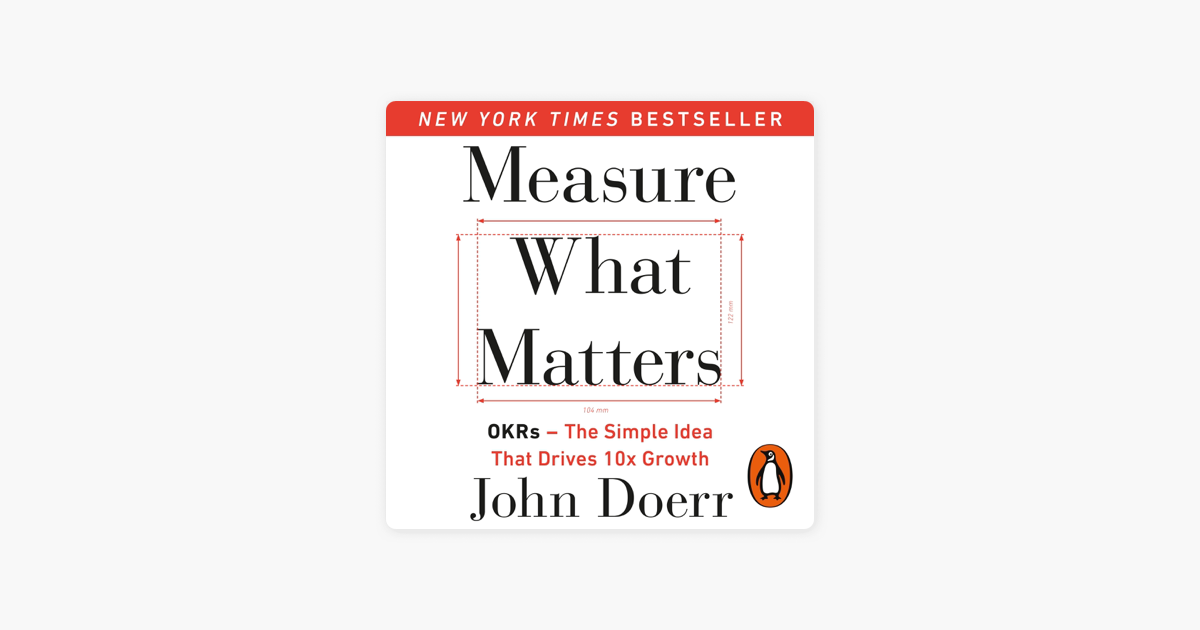
The book is all about OKRs and shares stories (with direct quotes) from various business leaders throughout the history of Silicon Valley. One of the highlights has to be the story of Andy Grove (who also authored High Output Management that’s on my list) who turned Intel around to be the staple microprocessor for the PC era and beat out Motorola.
There’s a lot of wisdom from the Google stories on not making OKRs everything and how a general shift in HR culture with respect to yearly appraisals needs to change to truly embrace OKRs as a quarterly thing that are wiped at the end of the quarter with a 70% completion rate benchmark, all of which feed data and feedback into the annual appraisal cycle.
There are stories of how other companies like Adobe and YouTube chose to embrace different feedback and communication systems to effectively manage expectations around their goals and how they managed to bounce back from overly ambitious goals that didn’t happen.
Key Insights
-
Goal Setting and Alignment: It’s indisputable that goal setting, alignment, and feedback sessions lead to a lot of positive outcomes towards goals. If goals aren’t met, there’s a good baseline expectation to measure against and see what went wrong. Was the goal too ambitious, or did we fail to account for certain variables?
- OKRs must also stretch to accommodate certain variables that can affect their outcomes, and that’s a good takeaway. They needn’t be binary; they can be fluid.
- Example: If the goal is to hit $1M in revenue, getting to $700k is still a good step, not a failure. An acceptance criterion on the OKR helps ground expectations and opens room for reflection and RCA (Root Cause Analysis) to identify areas for improvement.
-
Feedback Loops: A 2-week feedback loop on most OKR tracking seems to be the mix that worked best for the teams in the book. However, the price they paid was through the lack of their personal lives. At the same time, they also only had the job to worry about since they had the perks to keep them going and safe. That isn’t the case everywhere.
-
Cultural Context: In the end, we can’t have a system that is universal, nor can it stand the perversions of soulless MBAs. These systems were built by boots-on-the-ground managers who grew from technical roots and understood what worked and what didn’t.
My Takeaways
Here’s the framework I’ve outlined based on my learnings and readings:
- Set and Track OKRs: These can be higher-level items on top of stories.
- Weekly Check-ins: Understand blockers and progress.
- Analyze Contributors:
- Who moves the most towards the OKRs, and why?
- Are their OKRs simpler?
- Is their project simpler?
- Are their blockers different?
- Understand what is different and see what learnings can come over.
- Who moves the most towards the OKRs, and why?
- Identify At-Risk OKRs:
- Identify why they haven’t been worked towards.
- Understand what needs to change and communicate accordingly.
- Re-evaluate OKRs every 2 weeks at most.
- Monthly Reviews:
- Understand what’s working and what isn’t.
- Conduct 1:1s to:
- Start by asking how you can help them with what’s blocking them today.
- Don’t blame the skill; look at what that skill needs to get honed.
- Build a culture of ownership (e.g., getting people to build and own little parts of an existing project).
- Stop apologizing for bad processes. Maintain a list and escalate it to the right ears. Fight for them; if you can’t, they have no reason to follow you and trust you.
Final Thoughts
The author sounds like a grifter half the time, trying to get you to hire him to turn your team/org into a high-performance machine. Luckily, the book isn’t much about him, and he leaves the guests to add their quotes and just adds his analysis there. Overall it's a good read, OKRs were things I just skipped in college during the biz classes, but it’s good to have a more structured framework to think about them and how to implement them in a way that’s not just a checkbox exercise. I’m excited to try out some of these learnings in my own work and see how they pan out.
In the end I am making these notes to help me do my job better, and I hope that they can be useful to others as well. If you have any thoughts or feedback on the book or my takeaways, feel free to reach out!
// Enjoyed this post?
Help others discover it by sharing on your favorite platform.